
Custom Procedure Packs: How to Build the Right Surgical Pack
In a modern operating room, time is the scarcest resource and consistency is the difference between a smooth list and a chaotic one. The custom procedure pack, also known as the custom procedure tray or CPT, has become one of the most effective tools for delivering both. Rather than gathering dozens of individual sterile items before each case, the surgical team opens a single sterile pack containing every component pre-arranged for a specific procedure. For distributors, hospital procurement teams and importers, understanding how these packs are designed, what they contain and how to source them well is essential to serving surgical customers competitively. This guide explains how to build the right pack, from concept to purchase order.
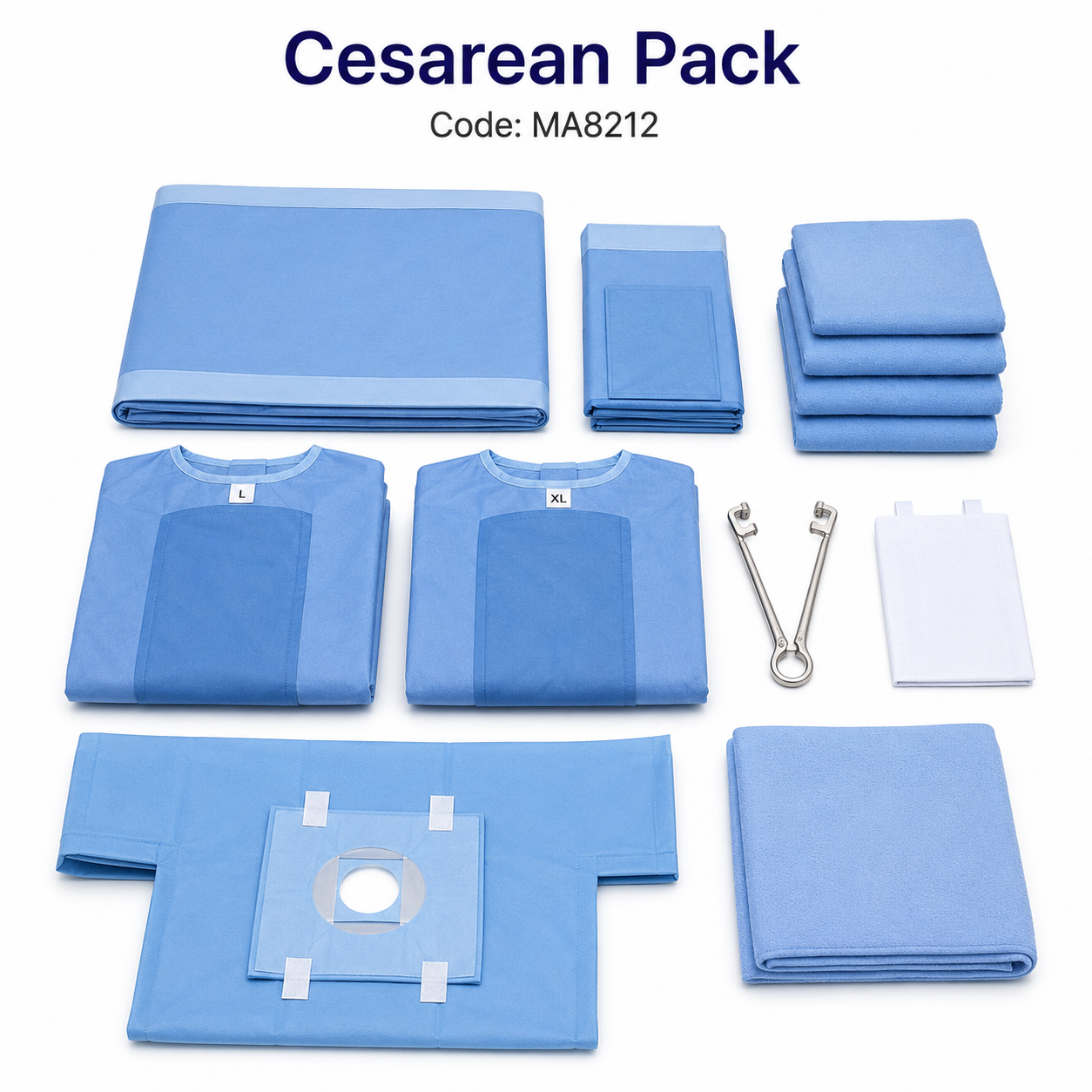
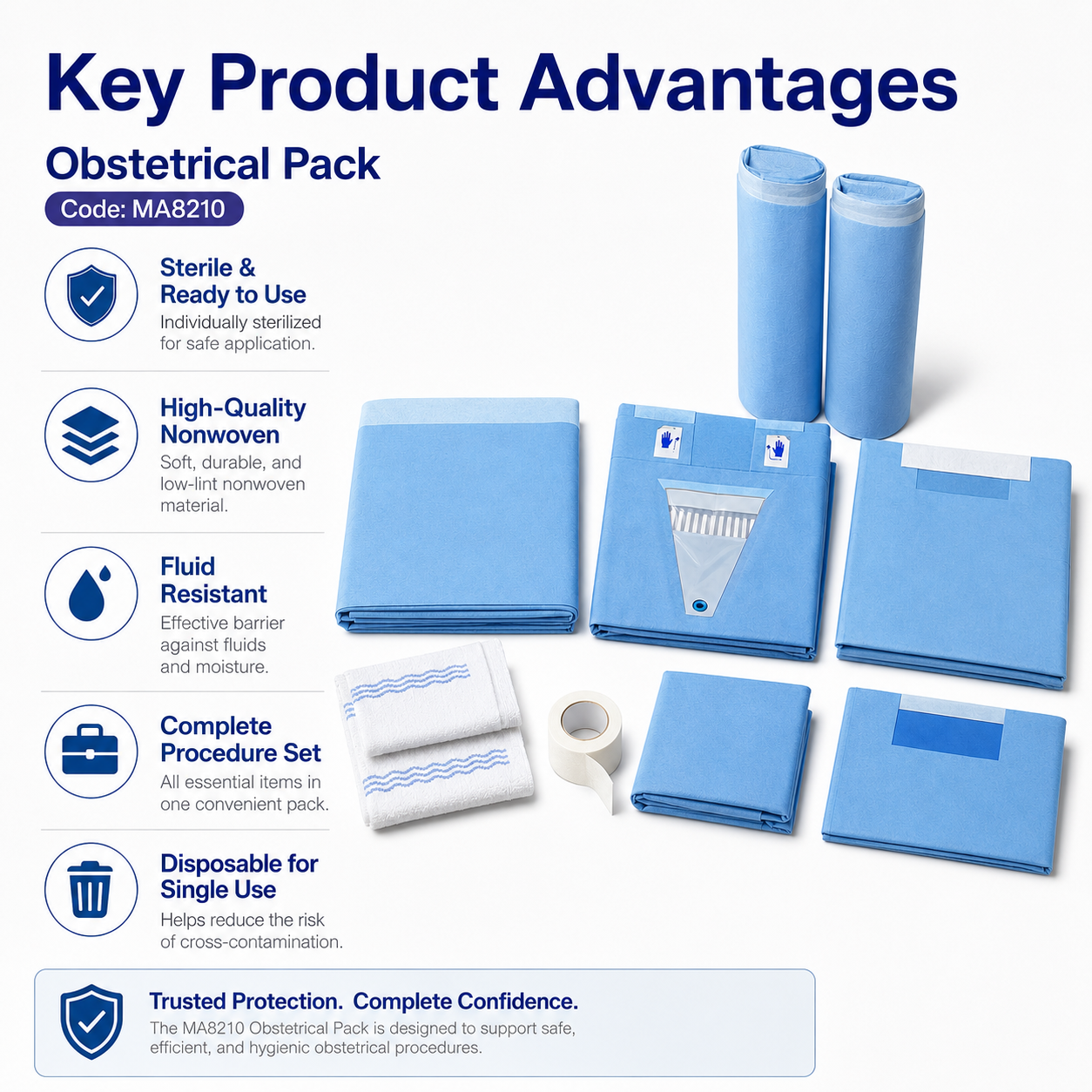
JPS Medical produces a range of procedure packs spanning universal and specialty configurations, including the Universal Pack (MA8111), the Obstetrical Pack (MA8210), the Cesarean Pack (MA8212) and the Laparoscopy Pack (MA8811). Each illustrates a different point on the spectrum from broad, all-purpose packs to highly specialized, procedure-specific kits.
What Custom and Standard Procedure Packs Are
A procedure pack is a sterile collection of single-use components assembled and packaged together for one type of surgical procedure. The term "custom procedure pack" reflects that the contents are configured to a customer's specification, the bill of materials is tailored to a hospital's or surgeon's preference, rather than sold as a fixed, off-the-shelf assortment. A "standard pack" is a manufacturer-defined configuration covering the common needs of a procedure, which many facilities adopt as-is or use as a starting point for customization.
The economic and clinical logic is straightforward. Every item the team would otherwise open individually, each drape, gown, swab and basin, is instead validated, sterilized and presented together. The result is faster case setup, fewer missed or wrong items, and a single sterile barrier system to inspect rather than dozens. Packs are typically sterilized by ethylene oxide or gamma irradiation at the manufacturer and supplied ready to open, with each component itself meeting the relevant device standards.
Universal vs Specialty Packs
Procedure packs fall along a spectrum from universal to highly specialized. The Universal Pack (MA8111) is a broad, general-purpose configuration suitable across many procedures; it standardizes the common foundation, drapes, gowns, basic accessories, so a hospital can cover routine cases with a single, high-volume SKU. Universal packs maximize purchasing leverage and simplify inventory, but may require the team to supplement with a few procedure-specific items.
Specialty packs, by contrast, are engineered around the precise needs of one procedure. The Obstetrical Pack (MA8210) is configured for vaginal delivery, with the drapes, fluid-collection features and accessories appropriate to childbirth. The Cesarean Pack (MA8212) addresses surgical delivery, with fenestrated and incise drapes, fluid management and components suited to an abdominal procedure. The Laparoscopy Pack (MA8811) supports minimally invasive surgery, with the drapes, gowns and accessories aligned to laparoscopic setup and the equipment involved. Specialty packs cost more per unit than universals but eliminate supplementation and further compress setup time for high-frequency procedures.
Typical Pack Components
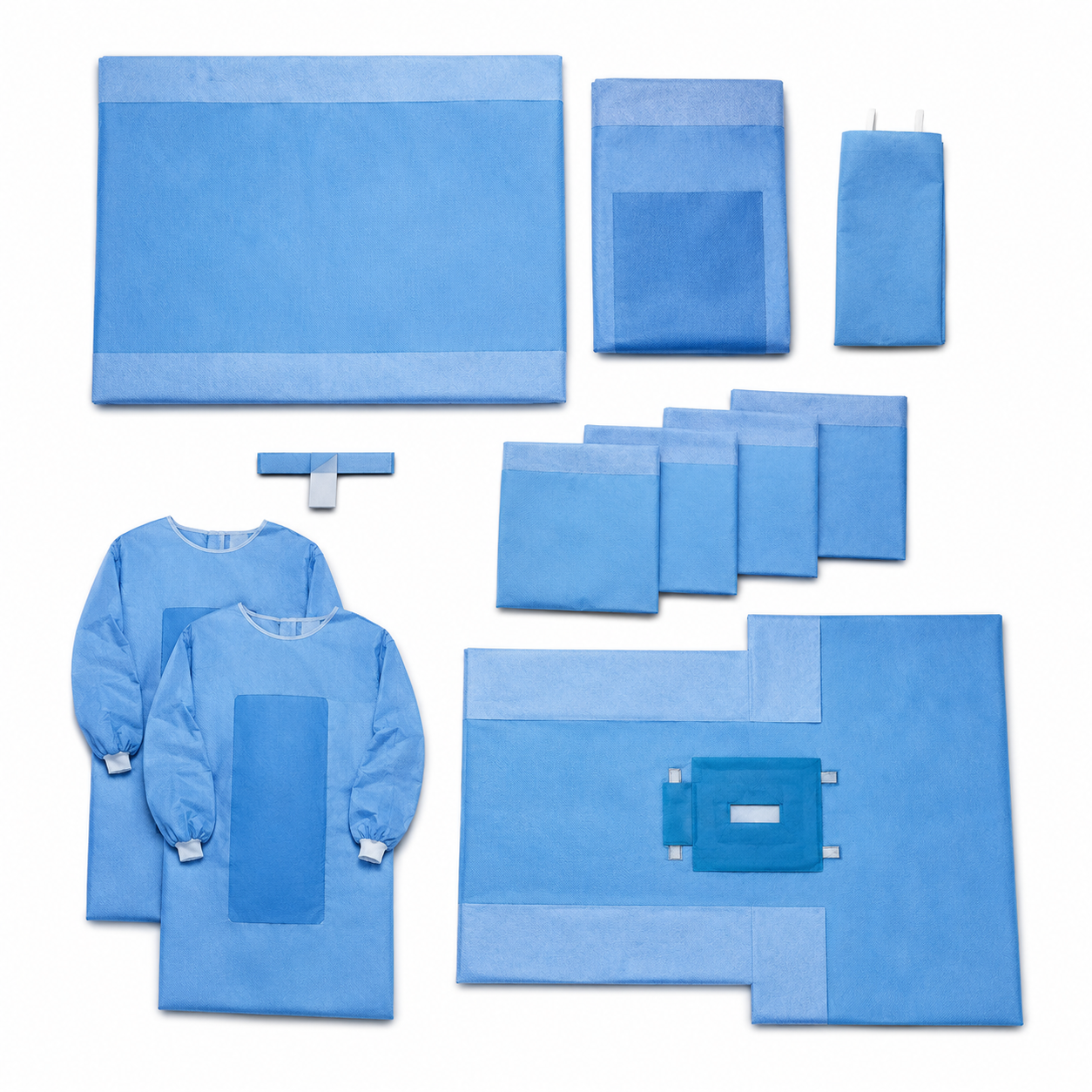
While the exact bill of materials varies by procedure and customer specification, most packs are built from a recognizable family of components. Understanding these helps procurement teams read and compare pack specifications intelligently:
- Drapes: the structural core of most packs, including main fenestrated drapes, side and reinforcement drapes, incise films and equipment covers, made from non-woven or laminated barrier materials.
- Gowns: surgical gowns for the team, often with reinforced critical zones, sized and counted to the procedure.
- Swabs and sponges: gauze swabs, often with radiopaque thread for detectability, and absorbent pads.
- Basins and bowls: for fluids and irrigation, frequently in nested configurations to save space.
- Accessories: items such as towels, table covers, light-handle covers, prep applicators, syringes, blades and waste bags, selected to the procedure.
A well-designed pack balances completeness against waste: it should contain what is reliably used in the great majority of cases, while items used only occasionally are better kept as separate stock. Over-packing a tray with rarely used components inflates cost and increases the volume of unused, discarded material.
The Sterile Barrier and Drape Performance
Because a procedure pack is opened directly onto the sterile field, its packaging is itself a sterile barrier system governed by ISO 11607, which sets the requirements for the materials, the barrier system and the validation of forming, sealing and assembly. The pack wrap and inner tray must maintain sterility through transport, storage and the act of opening, and the opening sequence is designed so the contents can be presented aseptically.
The drapes inside the pack carry their own performance expectations. In Europe, surgical drapes and gowns are covered by EN 13795, which defines barrier performance and identifies critical zones, the areas most exposed to fluid and contamination, where higher performance is required. When comparing packs, procurement should look beyond the item count to the barrier rating of the drapes and gowns, since a cheaper pack built from lower-performance materials is not a true equivalent.
A procedure pack is judged not by how many items it contains, but by how reliably it presents the right items, in the right order, through an intact sterile barrier, every single time.
Benefits: Turnover, Standardization, Inventory and Waste
The case for procedure packs rests on several reinforcing benefits. The most immediate is operating room turnover: opening one pack rather than assembling many items shortens setup, which can increase the number of cases a room handles per day, a direct revenue and access benefit for the facility. The second is standardization: a fixed, validated configuration removes variability between setups and reduces the risk of a missing or incorrect item discovered mid-procedure.
The third is inventory simplification. Replacing dozens of separately stocked, separately ordered items with a single pack SKU reduces purchasing complexity, storage footprint and the administrative cost of managing many line items. The fourth is waste and cost control: although waste is unavoidable in single-use surgery, a tightly designed pack carries only what is needed, and consolidated packaging reduces the volume of wrap and the labor of disposal. Together these benefits explain why packs have become standard practice across many surgical specialties.
Designing a Pack: Building the Bill of Materials
Designing a custom pack is a structured exercise in matching contents to actual clinical practice. A disciplined approach runs roughly as follows:
- Observe the procedure: document every item the team opens, in the order used, across several real cases to capture genuine practice rather than assumption.
- Draft the bill of materials: list each component with its specification, material grade and barrier requirement; distinguish core items used in nearly every case from optional ones.
- Rationalize: remove rarely used items to separate stock, consolidate sizes and select component grades that meet, without exceeding, clinical need.
- Define the assembly order: specify how components are layered so the pack opens in the correct aseptic sequence.
- Prototype and validate: trial sample packs with the surgical team, refine the configuration, then lock the specification for sterilization and production validation.
- Standardize SKUs: finalize a small set of packs that cover the procedure portfolio while keeping the number of distinct configurations manageable.
This process turns a wish list into an economical, clinically faithful pack. The supplier's role is to translate the agreed bill of materials into a validated, reproducibly manufactured product, which is where manufacturing quality and documentation become decisive.
| Pack | Code | Configuration | Primary procedure | Typical contents focus |
|---|---|---|---|---|
| Universal Pack | MA8111 | General-purpose | Broad / routine surgery | Common drapes, gowns, accessories |
| Obstetrical Pack | MA8210 | Specialty | Vaginal delivery | Delivery drapes, fluid management |
| Cesarean Pack | MA8212 | Specialty | Cesarean section | Fenestrated/incise drapes, abdominal setup |
| Laparoscopy Pack | MA8811 | Specialty | Minimally invasive surgery | Laparoscopic drapes, equipment covers |
Procurement, Certification and Lead Time
Sourcing procedure packs ties together every quality requirement of the components within them, so the supplier evaluation must be thorough. Before committing to a program, confirm the following with JPS Medical or any prospective manufacturer:
- Quality system: ISO 13485 certification of the manufacturing and assembly facility, with current certificates available.
- Standards conformity: ISO 11607 for the sterile barrier system, EN 13795 for drape and gown performance, and CE marking for the EU plus appropriate FDA status for the US market.
- Component traceability: documented specifications and lot traceability for each item in the bill of materials, not just for the finished pack.
- Quality control and AQL: inspection to a defined AQL with verification of pack completeness, component placement and seal integrity, plus certificates of conformity per batch.
- OEM and private label: full custom configuration of the bill of materials, branded packaging and labeling for distributors building their own pack programs.
- Commercial terms: minimum order quantities per configuration, realistic lead times that account for component sourcing and sterilization, and clear Incoterms (commonly FOB or CIF) so landed cost and risk are understood.
Lead time deserves particular attention with custom packs, because the manufacturer must source and qualify every component, assemble to specification, then sterilize and release, a longer cycle than a single off-the-shelf product. Build that reality into forecasting and reorder points. The payoff is a pack that arrives consistent, complete and validated, supporting the operating room's most valuable commodity: predictable, efficient time.
Key Takeaways
- Procedure packs (CPTs) bundle every sterile component for a procedure into one validated pack, cutting setup time and variability.
- Universal packs (MA8111) maximize standardization and purchasing leverage; specialty packs (MA8210, MA8212, MA8811) eliminate supplementation for high-frequency procedures.
- Typical contents, drapes, gowns, swabs, basins and accessories, should be matched to real clinical practice, not assumption.
- The pack is a sterile barrier system under ISO 11607; drape and gown barrier performance follows EN 13795, compare ratings, not just item counts.
- Design packs from an observed bill of materials, rationalize rarely used items out, prototype with the surgical team, then lock and validate.
- Vet suppliers on ISO 13485, CE/FDA status, component traceability, AQL-based QC, OEM/private-label capability, MOQ, lead time and Incoterms.
Need a quote on Surgical Packs?
Tell us your target quantity and destination — our B2B team replies within one business day with factory-direct pricing, lead time and OEM options.