
Adult and Baby Incontinence Products: Materials, Sizing and MOQ
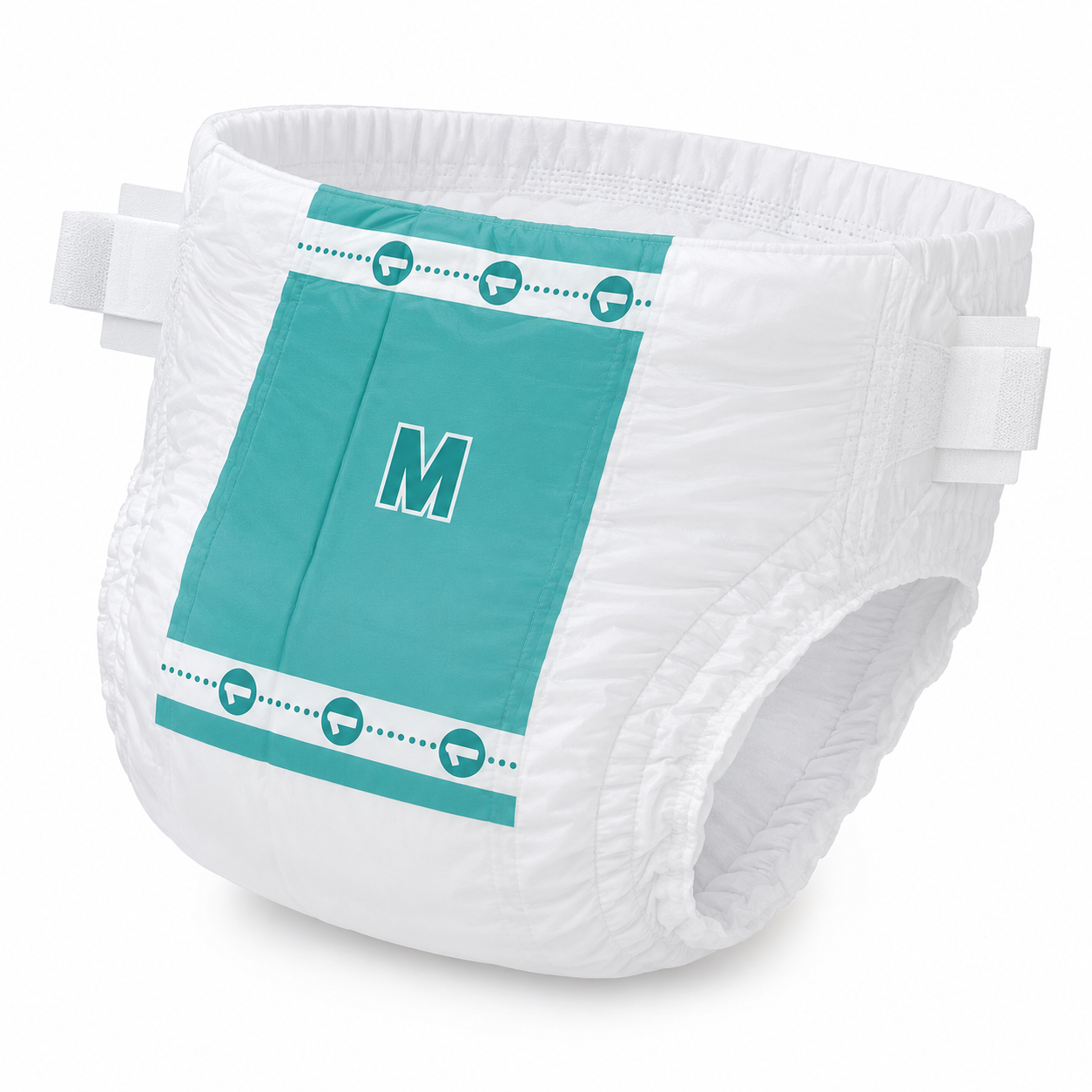
Incontinence care is one of the largest and most resilient categories in the disposable hygiene market, spanning hospitals, long-term care facilities, home care, and retail pharmacy shelves. For distributors and importers, it is also one of the most technically demanding to source well. A diaper or underpad looks simple, but its performance depends on an engineered absorbent system, validated material specifications, and consistent converting quality across millions of units. This guide walks procurement teams through the materials science, sizing logic, absorbency standards, and the commercial realities of minimum order quantities (MOQ) for adult and baby incontinence products, with reference to the JPS Medical lines: Adult Diaper (MB2469), Baby Diaper (MB2464), and Disposable Underpad (MB2460).
The Absorbent Core: Where Performance Is Won or Lost
Every credible incontinence product is built around a multi-layer absorbent structure, and the difference between a premium product and a leaking complaint case usually lives inside this core. Understanding the construction lets a buyer write a meaningful specification rather than ordering blind on price.
The modern core combines two key materials. The first is fluff pulp, a defibrated cellulose that provides bulk, structure, and rapid initial uptake of fluid. The second is superabsorbent polymer (SAP), sodium polyacrylate granules that can lock away many times their own weight in liquid and, critically, hold it under pressure so it does not return to the skin. The ratio of fluff pulp to SAP, the total grammage, and how evenly the SAP is distributed determine both total capacity and dryness under load.
Around the core sit two functional layers. The acquisition and distribution layer (ADL) is a non-woven sheet placed between the topsheet and the core. Its job is to take a sudden gush of fluid, spread it laterally across the whole core, and channel it downward so the SAP is used efficiently instead of saturating in one spot. A good ADL is the main reason a product survives repeated insults without surface wetness. The topsheet, usually a soft hydrophilic non-woven, sits against the skin and must pass fluid through quickly while feeling dry to the touch.
When buyers compare incontinence products on price alone, they are usually comparing fluff pulp weight. The real cost driver and the real performance driver is SAP content and ADL quality, and that is exactly where cheap private-label products are quietly thinned out.
The backsheet completes the system. Older products used a plain polyethylene (PE) film that was fully impervious but trapped heat and humidity against the skin. Most quality products today, including the JPS Medical Adult Diaper MB2469, use a breathable backsheet: a microporous film laminated to non-woven that blocks liquid while allowing water vapor to escape. This breathability is a meaningful skin-health feature in long-term-wear scenarios and is worth specifying explicitly in your purchase documentation.
Adult Diapers: Tab Style Versus Pull-Up
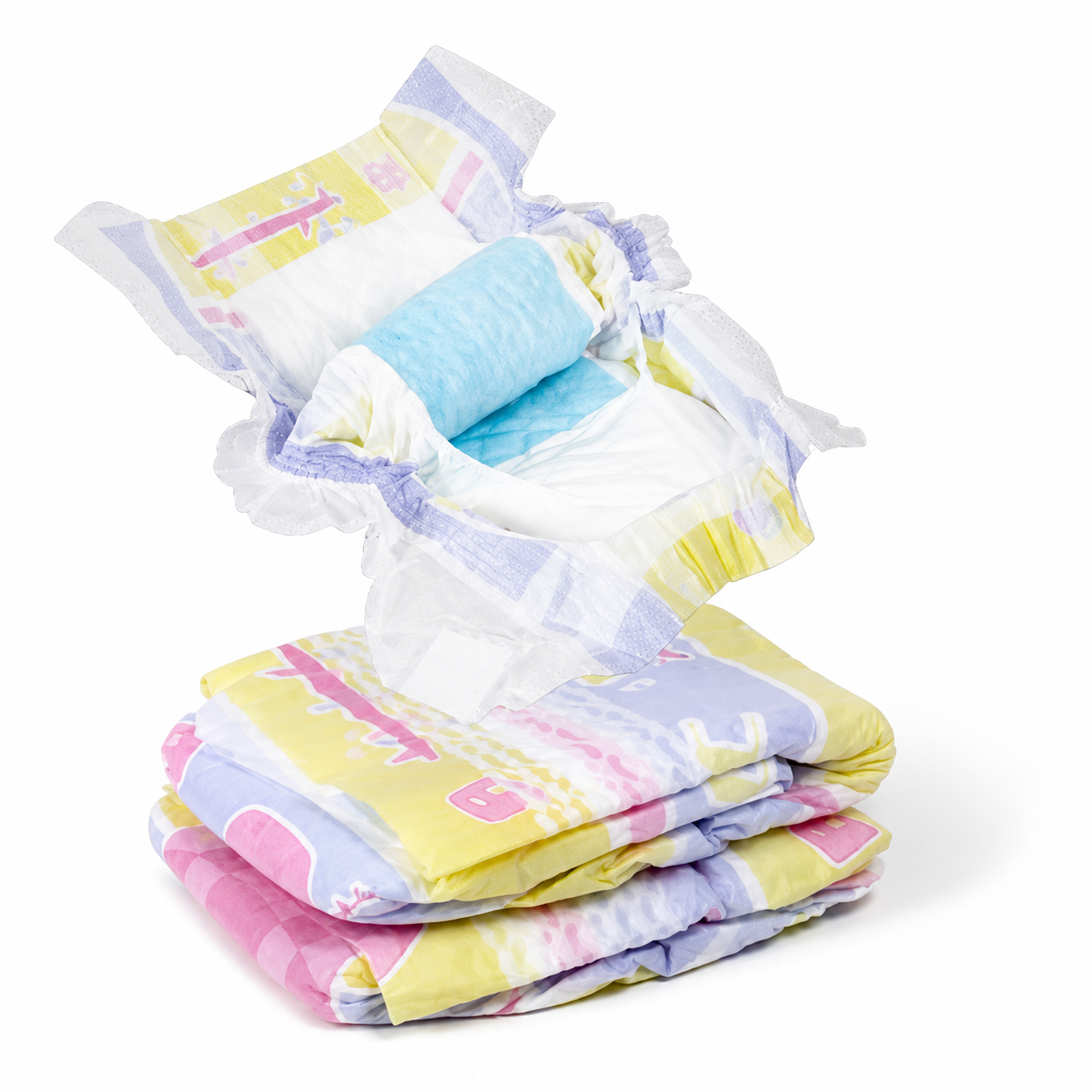
Adult incontinence products split into two main form factors, and the choice has direct implications for the end-care setting your distribution targets. The Adult Diaper MB2469 is typically offered in a tab (brief) style with refastenable side tapes, and many ranges also include a pull-up (pant) version. Getting the right mix into a container matters because the two serve different users.
Tab-style briefs open flat and are fastened with adhesive or mechanical hook tapes. They are the preferred choice for bedbound or heavily dependent patients because a caregiver can change them with the wearer lying down, and the side tapes allow the fit to be adjusted to body shape. They generally offer the highest absorbency tiers, making them suitable for overnight and heavy-incontinence use in nursing homes and hospitals.
Pull-up pants are worn like underwear with an elastic waistband and tear-away side seams for removal. They suit mobile, semi-independent users who can manage their own changes, and they support dignity and discretion in assisted-living and home settings. For procurement, the key dimensions to lock in are waist/hip range per size, absorbency tier, and the presence of standing leak guards.
- Leakage barriers: Standing inner leg cuffs are the single most important anti-leak feature on an adult brief. Confirm they are present, elasticated, and hydrophobic in your sample evaluation.
- Wetness indicator: A color-changing line that fades when saturated reduces unnecessary changes and is a valued feature in care facilities.
- Absorbency tier: Many ranges grade products as moderate, heavy, or maximum. Make sure the tier names map to a measurable capacity figure, not just marketing language.
- Sizing: Adult briefs are usually offered S/M/L/XL keyed to waist or hip circumference in centimeters. Always source the size chart and confirm it matches your target population.
Baby Diapers: Sizing by Weight, Not Age
The Baby Diaper MB2464 follows a sizing logic that catches many first-time importers off guard: sizes are defined by the infant's body weight, not age. The conventional ladder runs Newborn, S, M, L, XL, and sometimes XXL, each tied to a kilogram band. Selling on age confuses parents and drives returns, so your packaging and listings must always carry the weight range.
Quality baby diapers share the same core principles as adult products but emphasize softness, fit, and skin gentleness for delicate infant skin. Look for these construction features and specify them in your tech pack:
- Elasticated leg cuffs and waistband for a snug, gap-free fit that follows the baby's movement.
- Refastenable tape tabs on taped diapers, or tear-away seams on pant-style versions.
- Breathable backsheet and a soft, dermatologically considerate topsheet to support skin comfort during prolonged wear.
- Wetness indicator for the smaller sizes, which parents and nurseries value highly.
- 3D leak guards sized to the small leg openings of newborns and infants.
Because baby diapers are a high-velocity retail category, brand owners frequently order them as private-label products with custom printed topsheets, embossing, and retail bags. That makes them a strong candidate for OEM programs, but it also raises the stakes on consistency: any variation in fit or core distribution across production lots is immediately visible to repeat consumers.
Underpads: The Workhorse of Facility Care
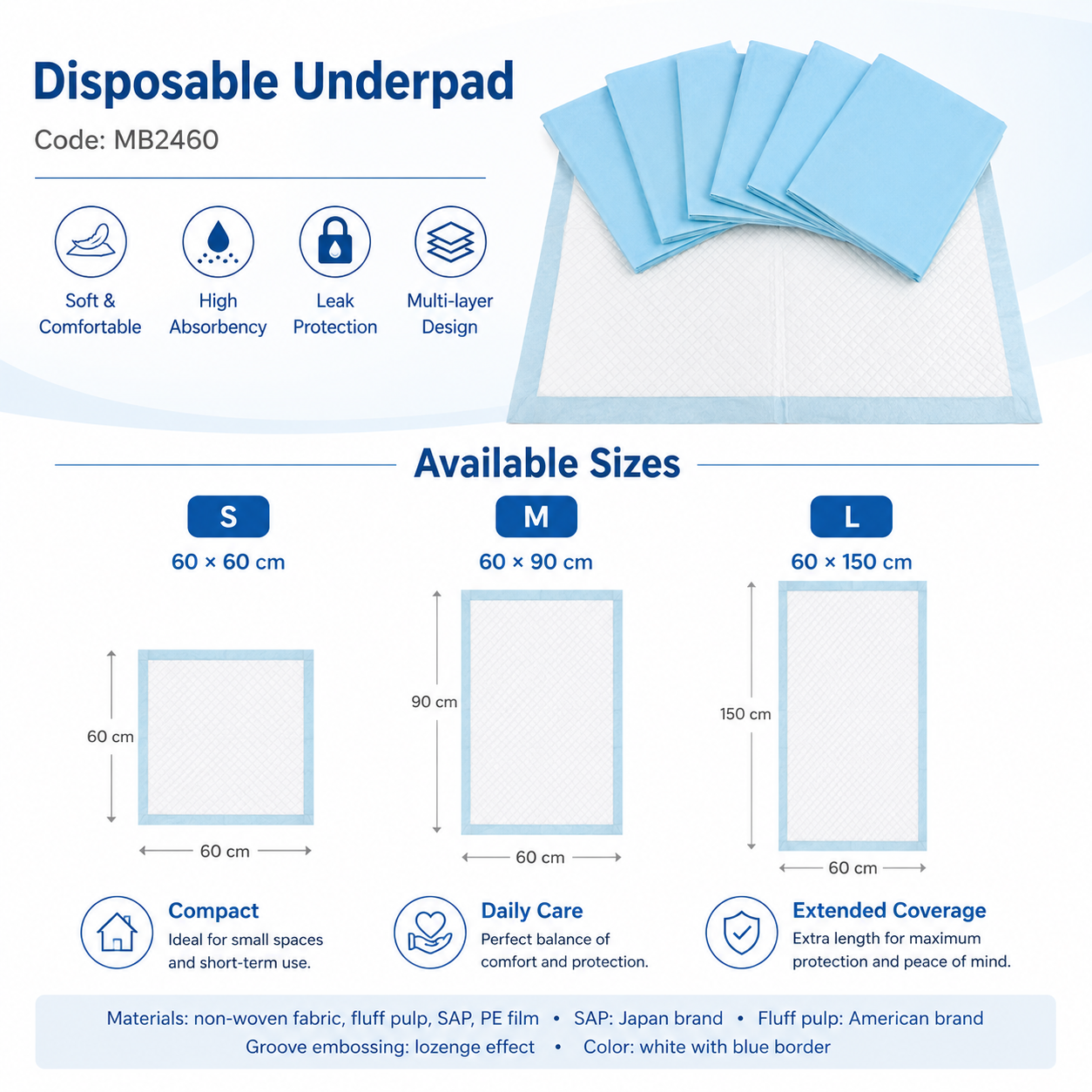
The Disposable Underpad MB2460, often called a bed pad or chux, protects mattresses, examination tables, and seating. It is a flat absorbent sheet rather than a worn garment, and it is consumed in enormous volumes across hospitals, clinics, veterinary practices, and home care. Underpads are graded by their footprint and their absorbent weight.
Standard sizes are quoted in centimeters, with 60 x 90 cm being the most common all-purpose dimension, alongside 60 x 60 cm and 45 x 60 cm for smaller applications and larger 60 x 120 cm pads for full-bed protection. The other defining spec is the total pad weight in grams, which signals the absorbent capacity. Construction mirrors the diaper: a soft non-woven or tissue topsheet, a fluff-pulp-and-SAP core, and a fluid-proof PE backing. Premium underpads add an embossed or quilted topsheet to distribute fluid and a tinted, anti-slip backsheet so the pad stays in place on bedding.
For underpads, define the weight in grams per piece, the backsheet film thickness in microns, whether tucking flaps are required, and the topsheet type. These three or four numbers turn a vague order into an enforceable specification.
Absorbency, Rewet and the Tests That Matter
The performance language used in incontinence sourcing should be tied to recognized test methods so that what you specify is what you can verify on receipt. Two concepts dominate technical evaluation: total absorbent capacity and rewet.
Total capacity is the maximum fluid a product can hold, but it is almost meaningless on its own because a product can hold a lot of liquid and still feel wet on the surface. Rewet is the measure that matters for skin health: after the product is loaded and then subjected to pressure, how much fluid comes back to the surface. A low rewet value means the SAP is locking fluid away and the skin stays dry under the body's weight. The internationally referenced framework for adult incontinence absorbency testing is ISO 11948, which describes methods for total absorption capacity (the Rothwell method) used to characterize disposable absorbent aids. Reputable suppliers will provide test data against recognized methods on request, and you should make this part of your sample qualification.
Other evaluation points to formalize in a test protocol:
- Acquisition time: how fast successive insults are absorbed, which predicts performance under repeated use.
- Leakage barrier integrity: a practical wear or load test confirming the standing cuffs and side seals hold.
- Breathability: water vapor transmission of the backsheet if breathable construction is claimed.
- Skin safety: dermatological compatibility and the absence of irritants or unnecessary fragrances, particularly important for incontinent skin that is already prone to dermatitis.
Specifications, Standards and Procurement Controls
Incontinence products are non-sterile, single-use hygiene articles. In most markets they are regulated either as low-risk medical devices or as consumer hygiene goods depending on claims and intended use. A capable manufacturer should operate an ISO 13485 quality management system, hold CE marking where the product is placed on the EU market as a device, and provide registration or listing documentation appropriate to your destination market. Always request the relevant free-sale certificate and test reports for the specific items you are importing, and confirm whether your market treats the product as a device or as a hygiene commodity, because that changes the documentation you need at customs.
The table below summarizes a practical specification framework to put in front of a supplier for the three JPS Medical lines.
| Parameter | Adult Diaper MB2469 | Baby Diaper MB2464 | Underpad MB2460 |
|---|---|---|---|
| Form factor | Tab brief and/or pull-up pant | Taped and/or pant style | Flat sheet |
| Sizing basis | Waist/hip cm (S–XL) | Body weight kg band | Footprint cm (e.g. 60x90) |
| Core system | Fluff pulp + SAP + ADL | Fluff pulp + SAP + ADL | Fluff pulp + SAP |
| Backsheet | Breathable microporous | Breathable microporous | PE film, anti-slip |
| Key absorbency metric | Capacity & rewet (ISO 11948) | Capacity & rewet | Pad weight (g) & capacity |
| Leak protection | Standing leg cuffs | 3D leg guards | Tucking flaps (optional) |
| Value-add features | Wetness indicator | Wetness indicator | Quilted/embossed topsheet |
MOQ Realities and Building a Reliable Hygiene Supply Line
Hygiene converting runs on high-speed lines that are expensive to set up and change over, so minimum order quantities in this category are genuinely higher than in many other disposables. Buyers coming from a gloves or mask background are sometimes surprised, but the economics are straightforward: a diaper line produces hundreds of units per minute, and a profitable run needs to amortize the raw-material reels, the SAP, and the line setup. A realistic MOQ for a standard, stock-design diaper is typically counted in tens of thousands of pieces per size, and for fully private-label products with custom printing and bagging the threshold rises further because printed films and bags carry their own minimums.
Several levers help you manage this. Ordering stock designs with a printed pack rather than a fully custom topsheet lowers the entry MOQ. Consolidating sizes into a single container and accepting a supplier's standard core specification reduces changeover cost. And committing to a forecast or blanket order across a year, with scheduled releases, lets a manufacturer plan material purchasing and often improves both price and lead time.
For OEM and private-label programs, agree the artwork, color references, bag dimensions, and any embossing in a signed tech pack before tooling, and ask for a printed pre-production sample. Confirm Incoterms 2020 explicitly: EXW, FOB, CIF, or DDP each shift cost and risk differently, and bulky, lightweight hygiene goods are volume-limited rather than weight-limited in a container, so freight planning is about cubic meters, not kilograms.
Quality control should be specified, not assumed. Apply an AQL-based pre-shipment inspection, typically inspecting for critical, major, and minor defects against agreed acceptance limits, covering dimensions, core distribution, tape/seam strength, leg-cuff integrity, packaging seal, and labeling accuracy. Confirm the supplier's ISO 13485 system, request the absorbency and rewet test reports for your exact items, and use a third-party inspection on first orders and periodically thereafter. Validated packaging matters too: while ISO 11607 governs sterile barrier systems and applies to sterile devices rather than these non-sterile hygiene goods, the discipline of specifying robust, sealed, moisture-protective primary and transport packaging keeps product clean and dry through long ocean transit.
Key Takeaways
- Performance lives in the core: the fluff-pulp-to-SAP ratio, the ADL, and a breathable backsheet drive dryness, not just total weight.
- Adult Diaper MB2469 comes as tab briefs (dependent care) or pull-ups (mobile users); baby diapers are sized by body weight; underpads by footprint (e.g. 60x90 cm) and pad weight.
- Specify absorbency and rewet against recognized methods such as ISO 11948, and require test reports during sample qualification.
- Require ISO 13485, plus CE marking and free-sale or registration documents appropriate to your destination market.
- Expect high MOQs in hygiene; lower them with stock designs, size consolidation, and blanket forecasts, and lock OEM artwork in a signed tech pack.
- Control quality with AQL pre-shipment inspection, third-party checks on first orders, and explicit Incoterms 2020 terms, planning container freight by volume.
Need a quote on Incontinence?
Tell us your target quantity and destination — our B2B team replies within one business day with factory-direct pricing, lead time and OEM options.