
Isolation Gowns vs Surgical Gowns: Specs, Standards and Use Cases
Few categories of medical apparel are misunderstood as often as protective gowns. Buyers routinely use "isolation gown" and "surgical gown" interchangeably, yet the two are distinct products built to different standards, intended for different tasks and tested against different barrier requirements. For distributors, hospital procurement teams and importers, getting the distinction right is not academic: it determines whether a gown is fit for the clinical setting, whether it clears regulatory review, and whether a tender is won or lost. This article sets out the differences clearly, explains the standards that govern barrier performance, and gives practical procurement guidance for sourcing isolation and patient gowns at scale.
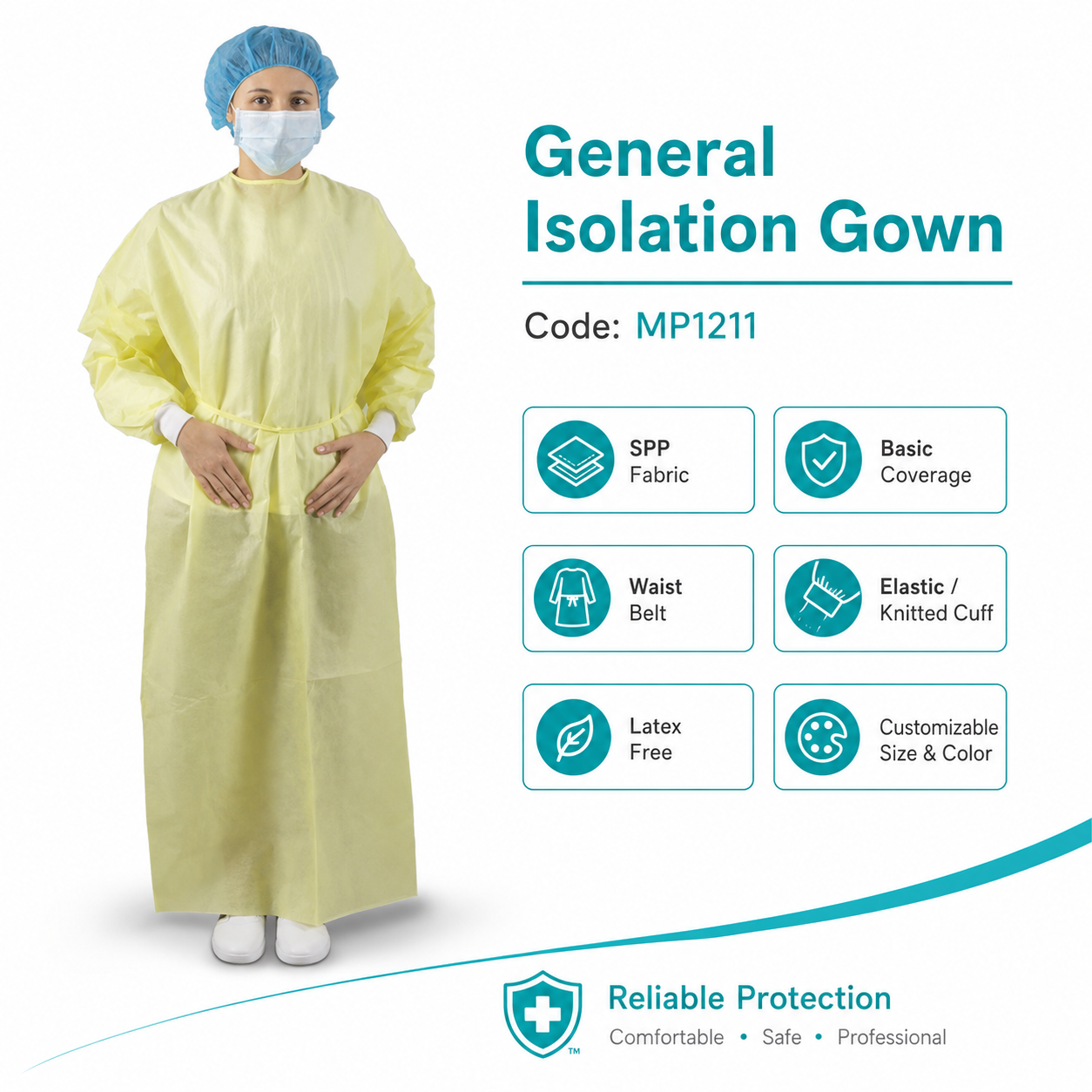
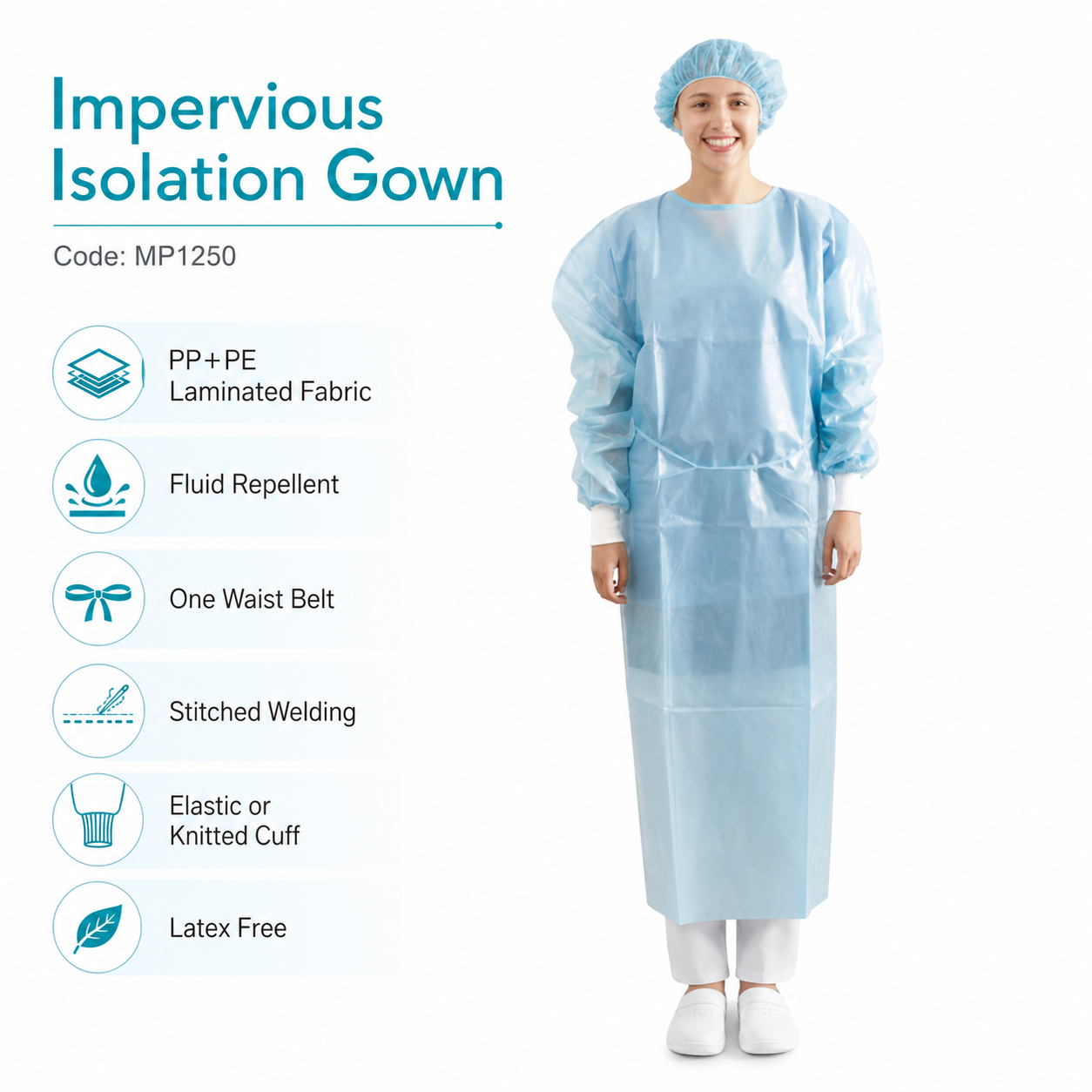
JPS Medical manufactures a focused gown range for non-surgical protective and patient-care use, including the General Isolation Gown (MP1211), the Impervious Isolation Gown (MP1250), the Isolation Gown (MP1220) and the Patient Gown (MP1214). Understanding where each belongs begins with the fundamental split between isolation and surgical gowns.
The Core Difference: Isolation Gowns vs Surgical Gowns
A surgical gown is a sterile, regulated garment worn by the surgical team in the operating room. Its purpose is twofold: to protect the patient from contamination shed by the wearer, and to protect the wearer from the patient's blood and fluids. Surgical gowns are governed in Europe by EN 13795, which defines critical and less-critical performance zones and sets requirements for both the standard and high-performance gown. They are typically sterile-packed, single-use and worn with a closed-back, fully wrap-around design and reinforced front and sleeve zones.
An isolation gown, by contrast, is a general protective garment used outside the sterile field, on wards, in isolation rooms, in the ICU and at patient bedsides. Its job is to create a barrier against the transfer of microorganisms and body fluids during routine and contact-precaution care. Isolation gowns are generally non-sterile, open at the back with tie or other closures, and are selected by required barrier level rather than by surgical performance zones. They are not a substitute for a surgical gown in the OR, and a surgical gown is usually overspecified and uneconomical for general ward use.
The right question is never "isolation or surgical?" in the abstract, but "what is the wearer protecting against, and in what setting?" The task defines the gown, not the label.
Barrier Levels: Understanding AAMI PB70
The single most important specification when buying isolation gowns is the barrier level defined by the AAMI PB70 standard, recognized widely including by the US FDA. PB70 classifies gowns into four levels of liquid-barrier protection, from Level 1 (minimal) to Level 4 (highest). The level is not a measure of fabric thickness or weight; it reflects validated resistance to liquid and, at the top level, viral penetration.
- Level 1 — minimal barrier, suitable for basic care, standard isolation and visitors, where exposure risk is low.
- Level 2 — low barrier, appropriate for tasks such as blood draws, suturing assistance and ICU work with limited fluid exposure.
- Level 3 — moderate barrier, used where there is moderate-to-high risk of fluid contact, such as arterial blood draws and trauma settings.
- Level 4 — highest barrier, with demonstrated resistance to fluid and viral penetration, intended for long, fluid-intensive procedures and high-risk infectious situations.
When specifying gowns in a tender, always state the required PB70 level explicitly and require the supplier to provide test data supporting the claim. A gown described merely as "fluid resistant" without a stated level and supporting evidence should be treated with caution. Procurement teams should also note that the critical zones, the areas of the gown most likely to be exposed, are where the barrier rating must hold.
Materials: Impervious, SMS and Non-Woven Construction
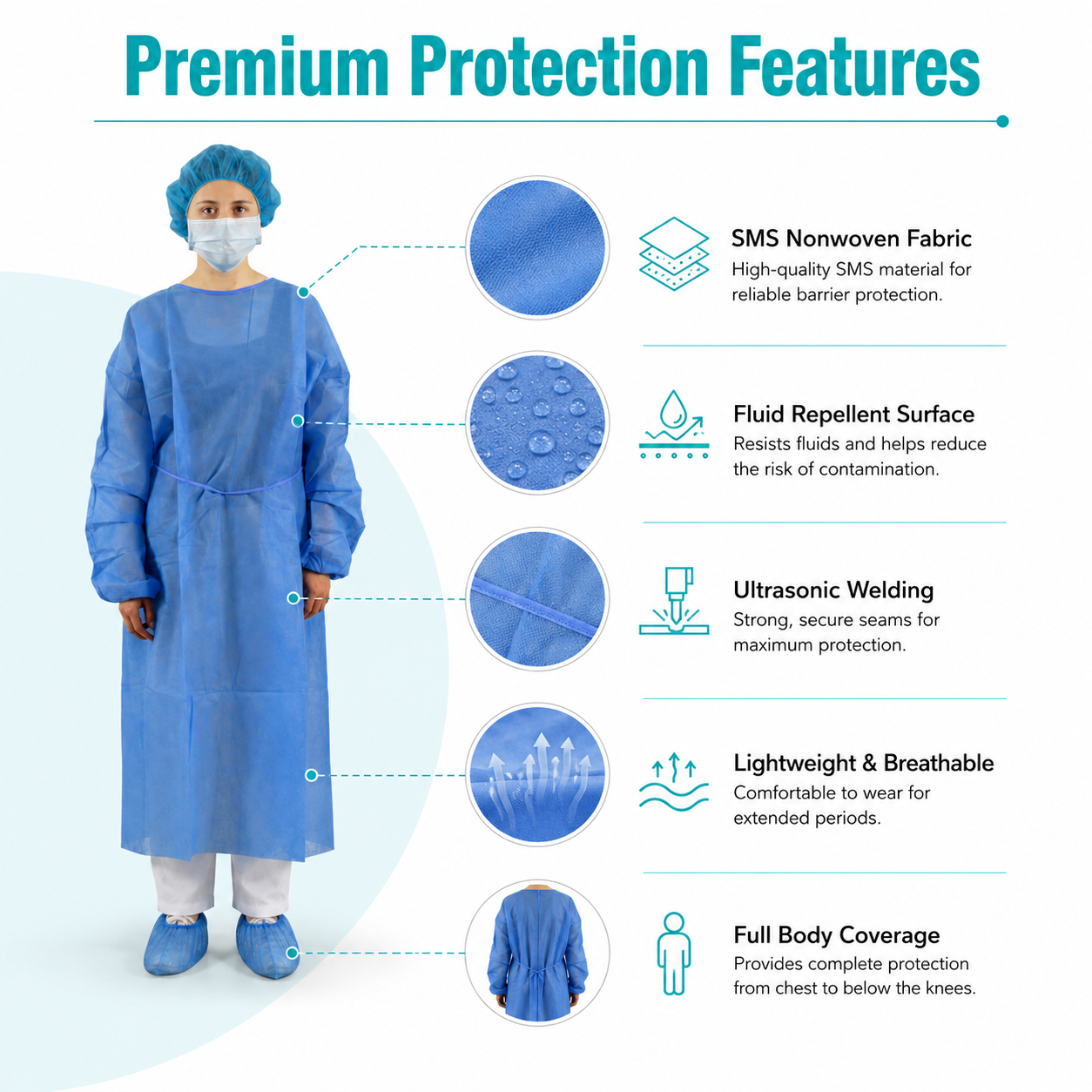
Gown performance follows directly from material. Two broad families dominate the isolation gown market. The first is the breathable non-woven, typically spunbond polypropylene (PP) or the three-layer spunbond-meltblown-spunbond (SMS) structure. SMS offers a useful balance of barrier, breathability and comfort: the meltblown core provides fluid and microbial resistance while the spunbond layers add strength and a soft hand. The General Isolation Gown (MP1211) and the Isolation Gown (MP1220) are typical of this breathable non-woven approach, well suited to routine and contact-precaution care where comfort over a full shift matters.
The second family is the impervious or film-laminated gown, in which a polyethylene (PE) film is bonded to a PP or non-woven substrate to create a near-complete liquid barrier. The Impervious Isolation Gown (MP1250) sits here: the laminated film delivers high fluid resistance for tasks with heavy splash or soak exposure, at the cost of reduced breathability. The trade-off is deliberate, where the priority is keeping fluids out, impermeability outranks airflow. Matching material family to barrier level and wear duration is the heart of good gown selection.
Design Features: Closures, Cuffs and Coverage
Beyond fabric, the engineering details determine usability and protection. Coverage should be adequate for the intended task, with sufficient length and overlap at the back. Most isolation gowns use a neck tie and one or more waist ties; some designs add an overlapping back panel for improved coverage in higher-risk use. Closures should be secure yet quick to don and doff, since speed of removal is itself an infection-control factor.
Cuffs are a frequently overlooked specification. Knitted or elastic cuffs keep the sleeve in place under gloves and prevent ride-up that would expose the wrist; thumb-loop or elastic knit cuffs are common on higher-barrier gowns. Sleeve and seam construction also matter: ultrasonic or sewn-and-taped seams maintain the barrier at the most vulnerable points. When evaluating samples, inspect the seams and cuffs under realistic donning, not just on a flat table.
Single-Use vs Reusable, and the Place of Patient Gowns
Most isolation gowns sold into the global market today are single-use disposables. The single-use model removes laundering and reprocessing burdens, guarantees a consistent barrier from a validated manufacturing process, and supports infection control by eliminating cross-contamination risk between patients. Reusable gowns exist and have a sustainability case, but they require validated laundering, tracking of wash cycles, and barrier re-testing, which adds operational complexity that many facilities prefer to avoid.
Distinct from protective isolation gowns is the Patient Gown (MP1214), worn by patients rather than staff. Its purpose is comfort, dignity and ease of clinical access, not barrier protection. Patient gowns are typically lightweight non-woven, designed for single use to support hygiene and reduce laundry load, with simple back ties or snaps for easy donning by patients with limited mobility. Buyers should not confuse patient gowns with protective gowns; they answer entirely different needs and should be specified and stocked separately.
Use Cases and Sizing
Mapping products to settings keeps inventory rational and spending efficient. General wards, visitor access and basic isolation rooms are well served by Level 1 to Level 2 breathable non-woven gowns such as the General Isolation Gown (MP1211) and Isolation Gown (MP1220). ICU work and contact precautions with potential fluid exposure may call for a higher PB70 level. Fluid-intensive bedside tasks, decontamination work and high-risk infectious scenarios are where the Impervious Isolation Gown (MP1250) earns its place. Patient-facing comfort and turnover are met by the Patient Gown (MP1214).
Sizing should err toward inclusive coverage. Most isolation gowns are offered in universal or a small set of sizes; the key is that the gown fully covers the torso and arms of the intended wearer population, with sleeves long enough to meet the cuffs of gloves. Oversizing slightly is usually safer than undersizing, since gaps in coverage defeat the barrier. Standardizing on one or two sizes simplifies storage while still fitting the great majority of staff.
| Product | Code | Construction | Barrier focus | Typical setting |
|---|---|---|---|---|
| General Isolation Gown | MP1211 | Breathable non-woven (PP/SMS) | Lower barrier, comfort | Wards, visitors, basic isolation |
| Isolation Gown | MP1220 | Breathable non-woven (PP/SMS) | General protective barrier | Routine & contact-precaution care |
| Impervious Isolation Gown | MP1250 | PE film-laminated | High fluid resistance | Fluid-intensive, high-risk tasks |
| Patient Gown | MP1214 | Lightweight non-woven | Comfort, not barrier | Patient wear, hospital turnover |
Procurement, Certification and Quality Control
Sourcing gowns at distributor scale demands the same documentary rigor as any regulated device. Before committing to volume, confirm the following with JPS Medical or any prospective supplier:
- Quality management: ISO 13485 certification of the manufacturing site, supported by current certificates.
- Barrier evidence: AAMI PB70 level claims backed by test reports, and EN 13795 data only where a product is positioned as a surgical (not isolation) gown.
- Market access: CE marking for the EU and appropriate FDA registration or clearance for the US, matched to the gown's classification.
- Quality control and AQL: Inspection to a defined AQL, with seam-integrity and barrier checks, traceable lot numbers and certificates of conformity per shipment.
- Commercial terms: Minimum order quantities per SKU and size, realistic production lead times, and clear Incoterms (commonly FOB or CIF) so landed cost and risk transfer are unambiguous.
- OEM and private label: Availability of custom colors, sizing, packaging and branding for distributors building their own gown lines.
The strongest gown suppliers treat barrier data and traceability as standard deliverables. Always request samples and, where possible, have end users wear-test them across a full shift before scaling an order. Comfort, donning speed and real-world seam integrity reveal themselves in use, not on a spec sheet, and they drive the repeat orders that make a supplier relationship worthwhile.
Key Takeaways
- Surgical gowns (sterile, EN 13795, OR use) and isolation gowns (general protective, ward use) are distinct, non-interchangeable products.
- Specify isolation gowns by AAMI PB70 barrier level (1 to 4) with supporting test data, not by vague "fluid resistant" claims.
- Breathable non-woven/SMS gowns (MP1211, MP1220) suit routine care; impervious film-laminated gowns (MP1250) suit fluid-intensive, high-risk tasks.
- Cuffs, closures, seams and coverage determine real-world protection, evaluate them on donned samples.
- Patient gowns (MP1214) are comfort garments, not barrier protection, stock them separately.
- Vet suppliers on ISO 13485, CE/FDA status, AQL-based QC, MOQ, lead time, Incoterms and OEM/private-label capability.
Need a quote on Isolation Gowns?
Tell us your target quantity and destination — our B2B team replies within one business day with factory-direct pricing, lead time and OEM options.